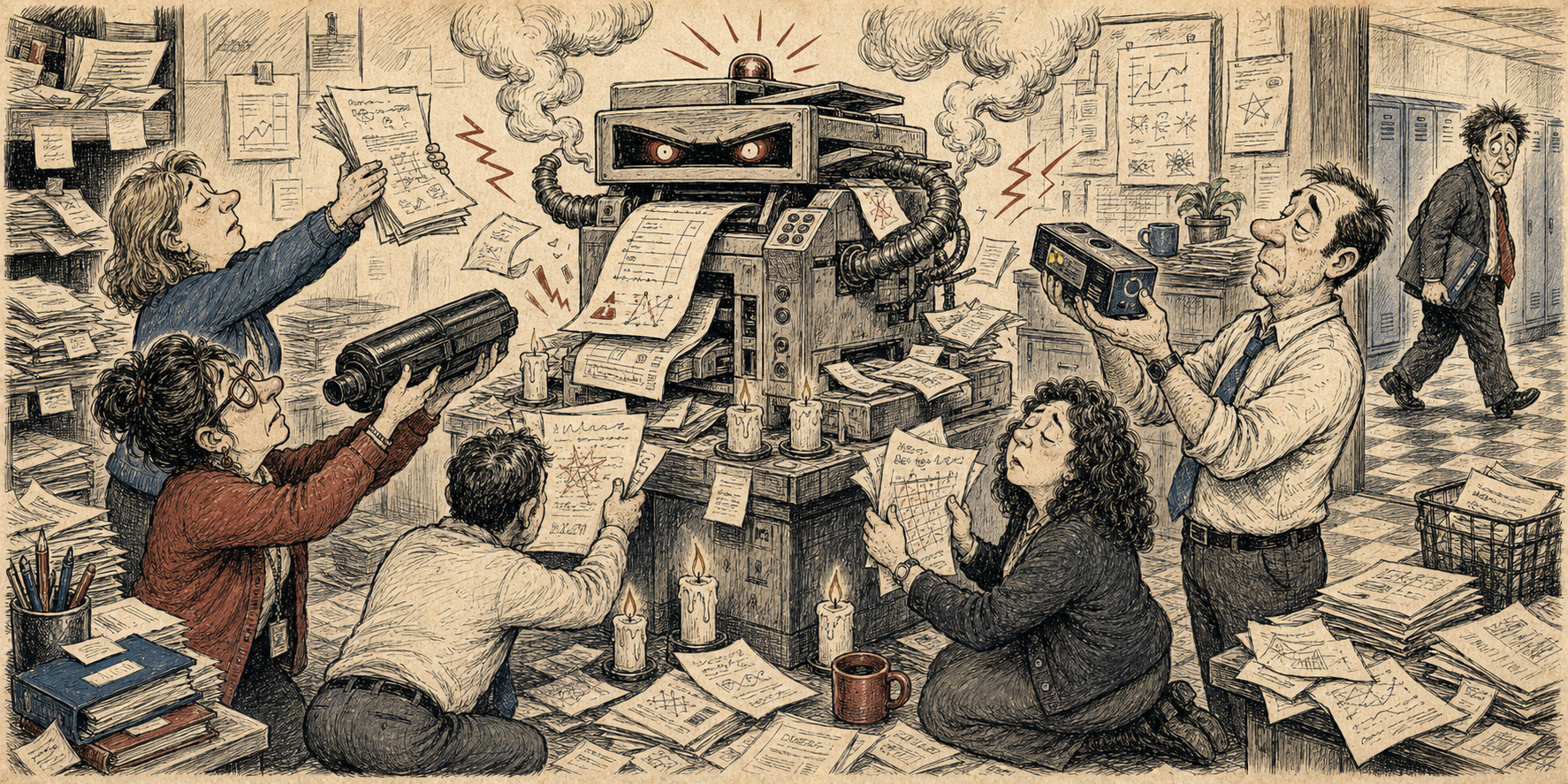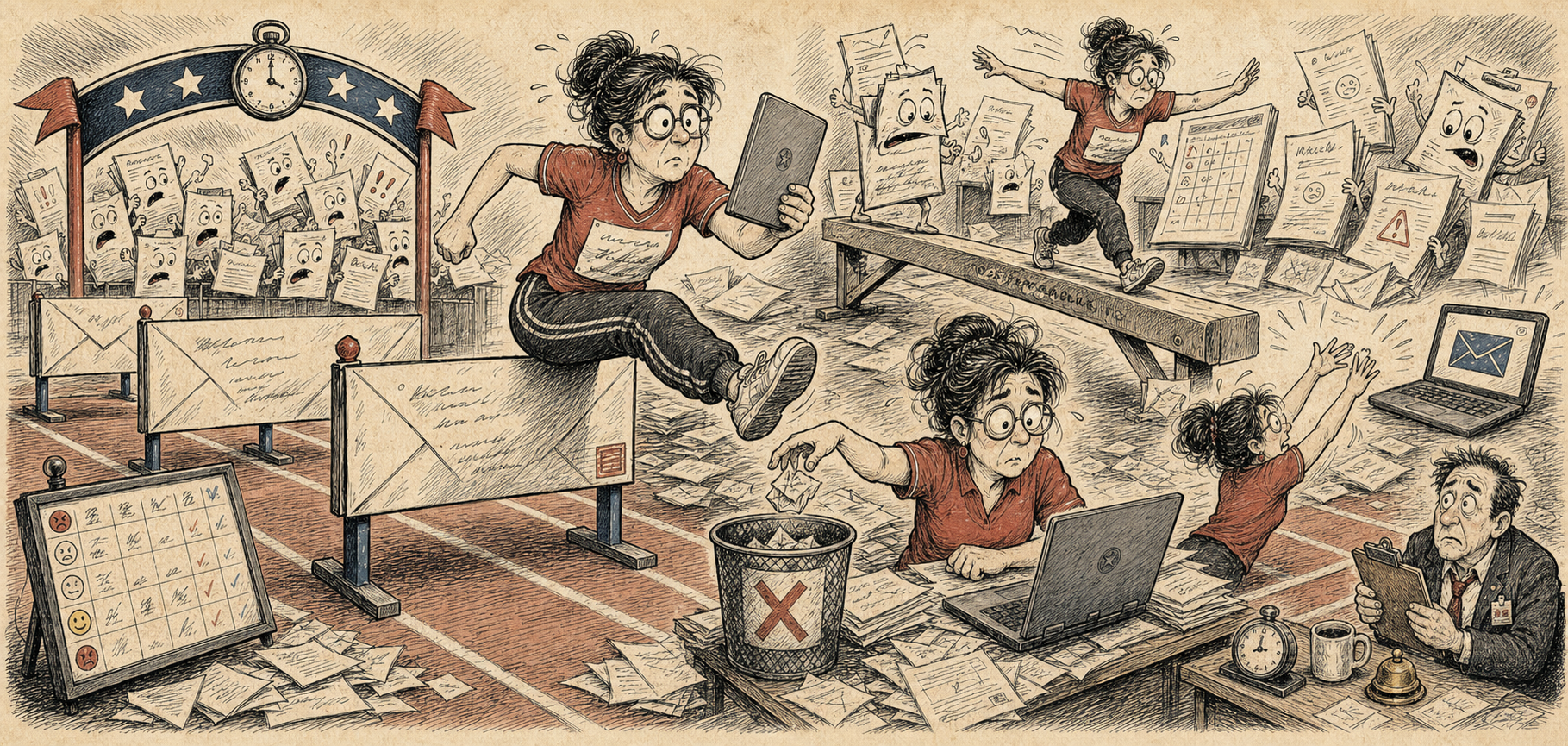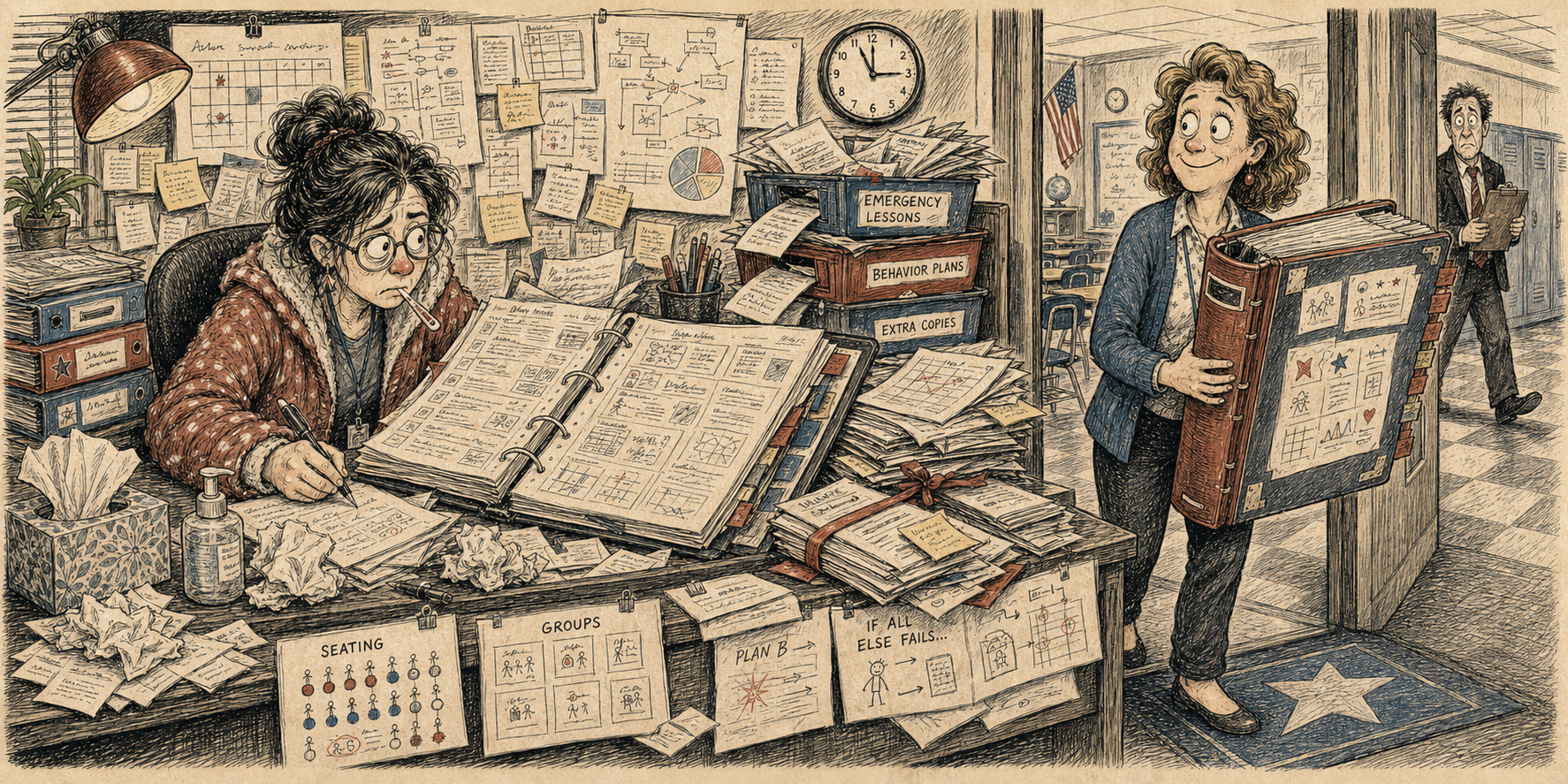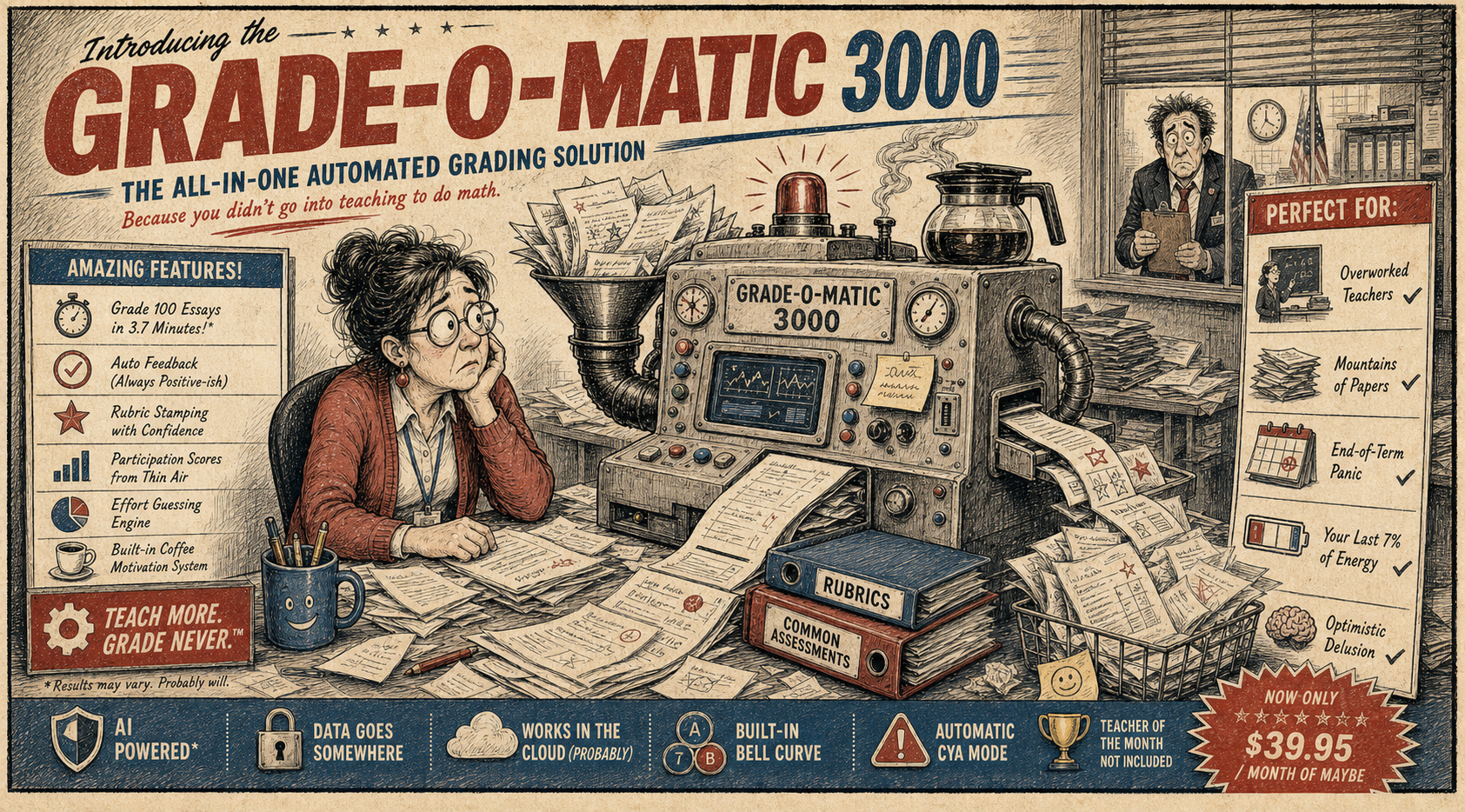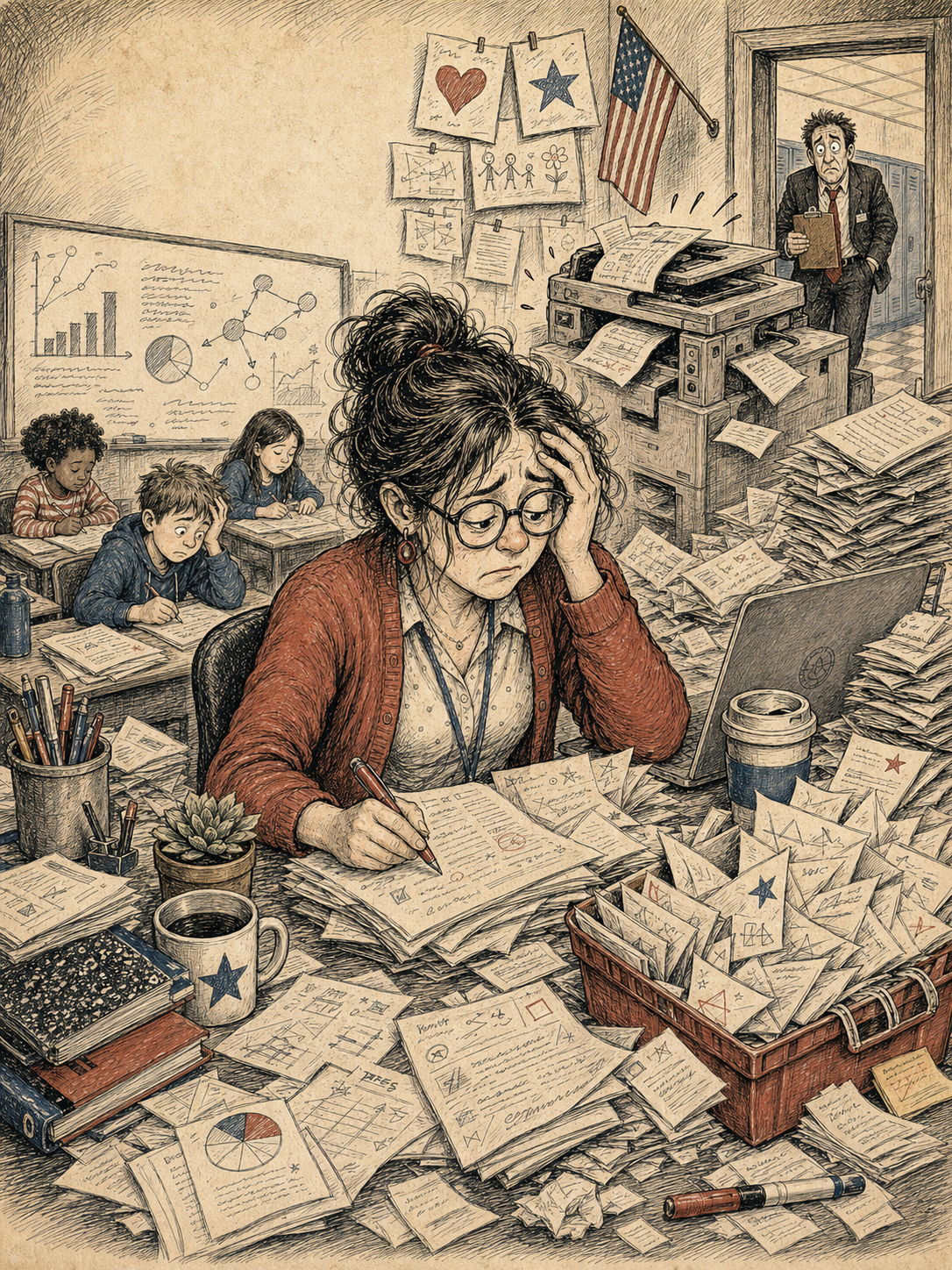
The teacher arrives early, which is to say only twelve people have already needed something. The inbox contains a parent question, a calendar update, a survey reminder, a district newsletter, an LMS alert, a message titled “quick ask,” and one email from a vendor promising to revolutionize instruction through a dashboard shaped like guilt.
The room is quiet for six minutes. This is when teachers perform the ancient rituals: write the agenda, unjam the pencil sharpener, locate the missing remote, arrange chairs into a formation that suggests optimism, and discover that someone has used the good scissors on something sticky.
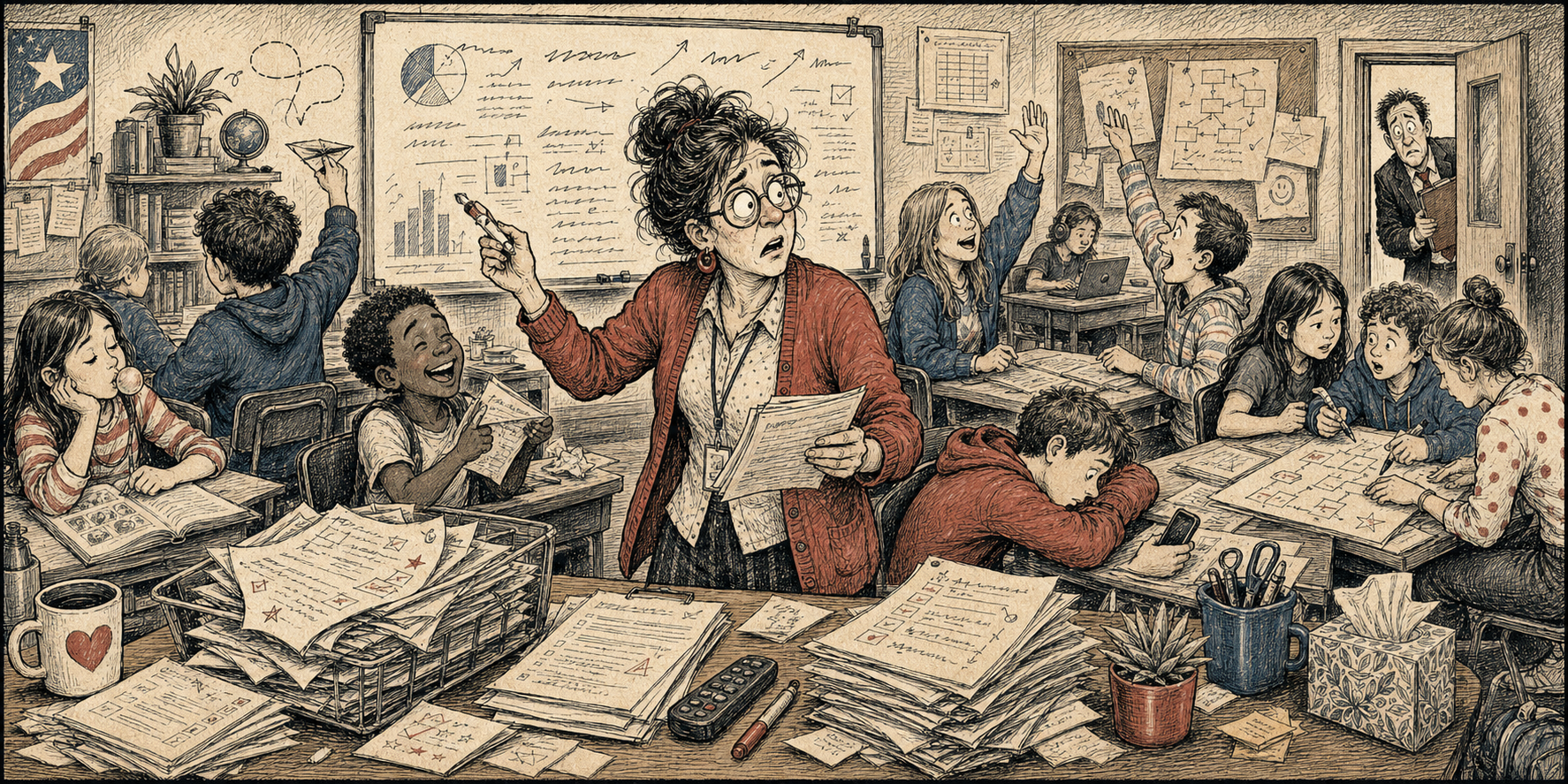
Then the students arrive with backpacks, water bottles, hoodies, half-finished stories, complex social dynamics, and the sudden need to tell you that their cousin has a lizard named Kevin.
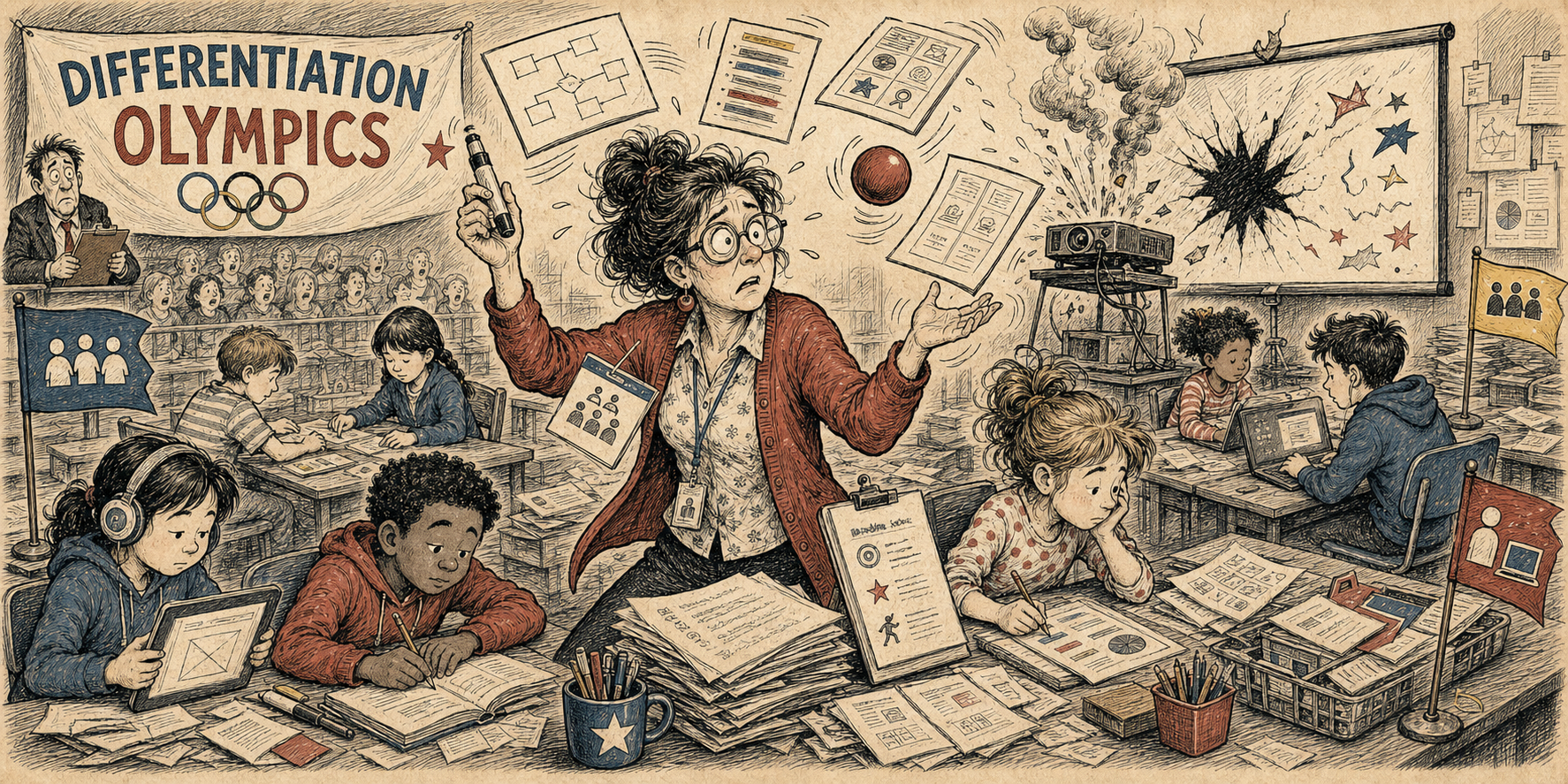
The plan says discussion. The class says fire drill. The pacing guide says chapter four. The reality says three students need reteaching, two need challenge, one needs a pencil, and the pencil needs therapy.
Still, learning happens. Not always in the photogenic way promised by brochures, but in the quieter way: a student revises a sentence, asks a better question, helps a peer, tries again, or stays after class to say the thing they could not say out loud.
By dismissal, the teacher has taught, coached, redirected, translated, improvised, documented, encouraged, supervised, and eaten lunch in under seven minutes. Then someone asks if the homework is graded yet. History records that the teacher smiled. Barely.